
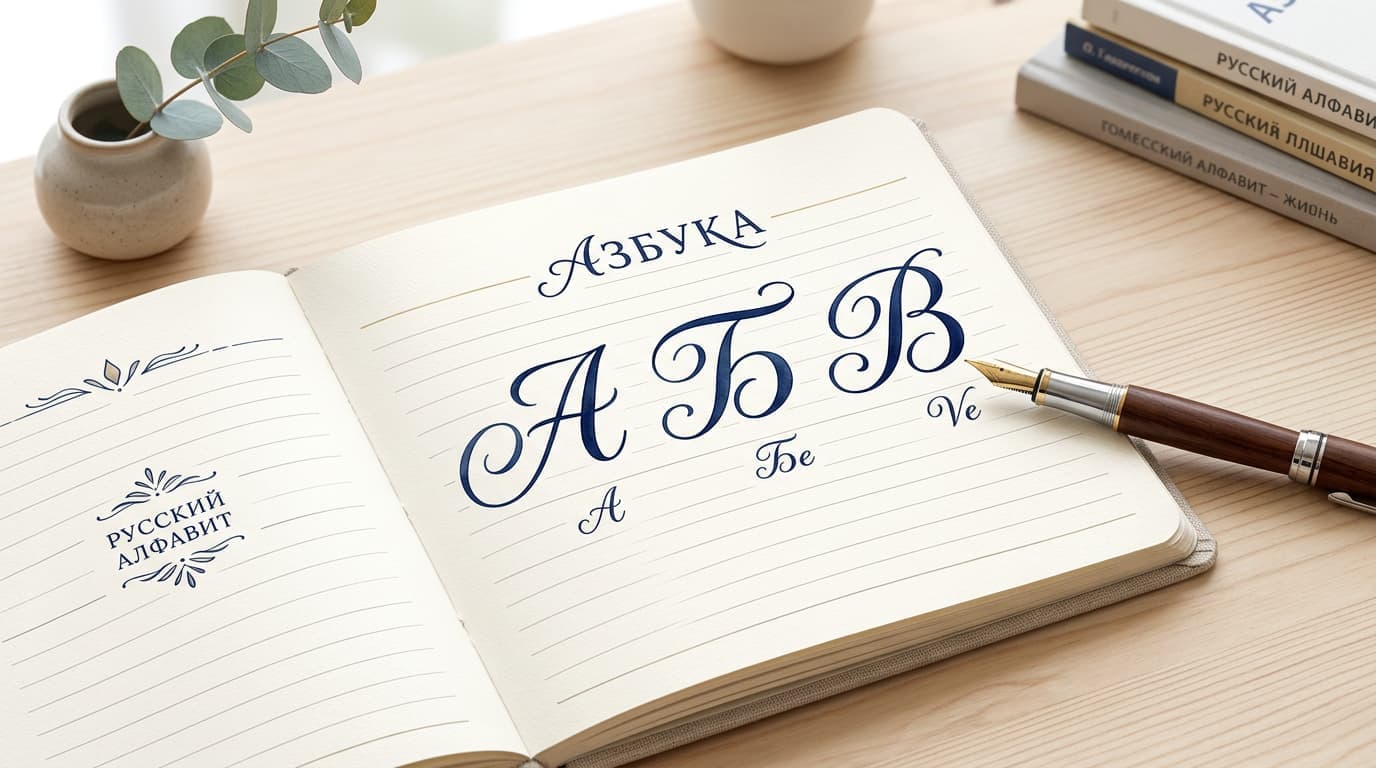

Impara l'alfabeto russo: ogni lettera, suono, mnemoniche e parola base
L'alfabeto russo (cirillico) ha 33 lettere — e puoi impararle tutte in 2–4 settimane con l'approccio giusto. Questa guida ti offre una mnemonica visiva, una parola base e un'analogia sonora con l'inglese per ogni singola lettera, più trucchi per distinguere le coppie confuse.
È il tuo punto di partenza CEFR A1. Una volta che sai leggere il cirillico, tutto il resto — grammatica, lessico, conversazione — diventa molto più facile.
- Tutte le 33 lettere con pronuncia, mnemoniche e parole d'esempio
- Trucchi visivi per ricordare ogni lettera (a cosa "assomiglia")
- Come distinguere le coppie confuse: Л/П, Б/В, Ш/Щ, Ъ/Ь e altre
- Riduzione vocalica — la regola di pronuncia #1 in russo
- Esercizi di pratica e un piano di apprendimento passo passo
I 4 gruppi: come imparare l'alfabeto velocemente
L'alfabeto russo ha 33 lettere cirilliche — 10 delle quali sono identiche alle lettere latine. Inizia con il gruppo "facile", poi impara i "falsi amici", poi le lettere uniche. Con 15–20 minuti di pratica quotidiana, la maggior parte dei principianti legge il cirillico con sicurezza in 2–4 settimane.
Non cercare di imparare tutte le 33 in una volta. Suddividile in 4 gruppi in base a quanto sono familiari per un madrelingua inglese. La ricerca mostra che raggruppare le informazioni nuove in gruppi di 5–7 elementi è la strategia di memorizzazione più efficace.
Gruppo 1: Vecchi amici (stesso aspetto, stesso suono)
Queste lettere sembrano e suonano quasi identiche all'inglese. Le conosci già.
А а — "a" come in padre
- Mnemonica: È semplicemente la lettera A!
- Parole: арбуз (arbuz — anguria), автобус (avtobus — autobus), Анна (Anna)
- Suggerimento: Quando non è accentata, А suona ancora "a" (a differenza di О, che cambia — vedi sotto)
К к — "k" come in kite
- Mnemonica: Sembra una K, suona come K
- Parole: кот (kot — gatto), кино (kino — cinema), кофе (kofe — caffè)
- Suggerimento: La К russa non è mai muta, a differenza della K inglese in "knife"
М м — "m" come in mamma
- Mnemonica: M è M in qualsiasi lingua
- Parole: мама (mama — mamma), молоко (moloko — latte), Москва (Moskva — Mosca)
- Suggerimento: Una delle prime parole che ogni bambino russo impara: мама
О о — "o" come in more (quando accentata)
- Mnemonica: Una O rotonda — stessa forma, stessa idea
- Parole: окно (okno — finestra), озеро (ozero — lago), он (on — lui)
- Suggerimento: Quando non è accentata, О suona "a"! Questa è la regola di pronuncia più importante in russo. МоскВА si pronuncia "Mask-VA", non "Mosk-VO". L'accento è sull'ultima sillaba, quindi la О suona "a".
Т т — "t" come in tavolo
- Mnemonica: Stessa T, stesso suono
- Parole: такси (taksi — taxi), телефон (telefon — telefono), торт (tort — torta)
- Suggerimento: La Т russa è sempre una "t" pulita — mai il suono morbido "th"
Gruppo 2: Falsi amici (aspetto familiare, suono diverso!)
Queste sono le lettere più insidiose. Il cervello vede una forma familiare e assume il suono sbagliato. Presta attenzione extra qui.
В в — "v" come in vero (NON "B"!)
- Mnemonica: Pensa "Valentino" — В sembra una B ma dice "V"
- Parole: вода (voda — acqua), врач (vrach — medico), Владимир (Vladimir)
- Trucco: Se vedi В e vuoi dire "B", FERMATI. È sempre "V". Il suono "B" vero è Б (che sembra un 6)
Е е — "ye" come in yes (NON "E"!)
- Mnemonica: Pensa "Yelena" — il nome inizia con Е
- Parole: еда (yeda — cibo), есть (yest' — mangiare / c'è), ещё (yeshchyo — ancora)
- Trucco: All'inizio di parola o dopo una vocale, Е = "ye". Dopo una consonante, addolcisce la consonante e suona più come "e"
Н н — "n" come in no (NON "H"!)
- Mnemonica: Н sembra una H con la barra spostata in alto — pensa "No, non è H!"
- Parole: нет (nyet — no), нос (nos — naso), Наташа (Natasha)
- Trucco: Il vero suono "H" in russo è Х (gutturale, come il "loch" scozzese)
Р р — "r" arrotolata (NON "P"!)
- Mnemonica: Sembra una P ma Ruota sulla lingua — pensa a un pirata che dice "RRR!"
- Parole: рыба (ryba — pesce), работа (rabota — lavoro), Россия (Rossiya — Russia)
- Trucco: Il vero suono "P" in russo è П (che sembra una Π greca / portale)
С с — "s" come in sole (NON "C" come in "gatto"!)
- Mnemonica: Sembra una C ma Sibila come un serpente — "ssss"
- Parole: собака (sobaka — cane), солнце (solntse — sole), спасибо (spasibo — grazie)
- Trucco: Non esiste il suono "C come in gatto" in cirillico. С è sempre "S"
У у — "oo" come in moon
- Mnemonica: У sembra un gancio che pende — "ooh, cosa c'è su quel gancio?"
- Parole: утро (utro — mattina), улица (ulitsa — strada), урок (urok — lezione)
- Trucco: È sempre un suono "oo" puro — mai "yoo" come la "u" inglese in "use"
Х х — "kh" come in loch (gutturale, NON "X"!)
- Mnemonica: Sembra una X ma suona come se ti schiarissi la gola — come il "loch" scozzese o il "Bach" tedesco
- Parole: хлеб (khleb — pane), холодно (kholodno — freddo), хорошо (khorosho — bene/OK)
- Trucco: Pensa alla "ch" in "Chanukkah" — quello è il suono Х
Vuoi un insegnante russo madrelingua che corregga la tua pronuncia in tempo reale? I "falsi amici" sono molto più facili da padroneggiare con feedback dal vivo.
Gruppo 3: Nuovi amici (forme uniche, suoni nuovi)
Queste lettere hanno un aspetto non familiare, ma ognuna ha una forma memorabile. Qui le mnemoniche visive aiutano davvero.
Б б — "b" come in bat
- Mnemonica: Б sembra il numero 6 — o una pancia con un cappello sopra
- Parole: бабушка (babushka — nonna), банк (bank — banca), больно (bol'no — doloroso)
- Trucco per distinguere Б da В: Б (=b) ha una mensola piatta in alto ─. В (=v) ha due gobbe come B. Ricorda: Бelly = b, Вalentine = v
Г г — "g" come in go
- Mnemonica: Г sembra una L capovolta o una gogna
- Parole: город (gorod — città), где (gde — dove), газета (gazeta — giornale)
- Suggerimento: Sempre una "g" dura come in "go", mai morbida come in "gem"
Д д — "d" come in dog
- Mnemonica: Д sembra una piccola casa — дом (dom) significa "casa"! Le due gambe sono le fondamenta, il triangolo è il tetto. La prima parola che leggerai: дом.
- Parole: дом (dom — casa), да (da — sì), друг (drug — amico), дверь (dver' — porta)
- Suggerimento: La д minuscola può essere scritta anche come una "g" corsiva — non confonderla con Г
Ж ж — "zh" come la "s" in measure
- Mnemonica: Ж sembra un insetto/coleottero (жук = zhuk = coleottero!) — ali e zampe aperte
- Parole: жук (zhuk — coleottero), жизнь (zhizn' — vita), женщина (zhenshchina — donna)
- Suggerimento: Pensa alla "s" in "pleasure" o "vision" — quello è il suono zh
З з — "z" come in zoo
- Mnemonica: З sembra il numero 3 — e "z" è la 3ª lettera dalla fine dell'alfabeto inglese
- Parole: здоровье (zdorov'ye — salute), здравствуйте (zdravstvuyte — ciao formale), зима (zima — inverno)
- Suggerimento: È sempre una "z" ronzante, mai una "s"
И и — "ee" come in see
- Mnemonica: И sembra una N al rovescio — pensa "eeN al contrario"
- Parole: имя (imya — nome), интересно (interesno — interessante), играть (igrat' — giocare)
- Suggerimento: È un suono "ee" puro — la vocale più comune in russo
Й й — "y" come in boy ("ee" breve)
- Mnemonica: Й è solo И con un cappellino (breve) sopra — pensala come una "ee" breve e veloce o la "y" in "boy"
- Parole: йогурт (yogurt), чай (chay — tè), мой (moy — mio)
- Trucco per distinguere И da Й: И = "ee" lunga (come in "see"). Й = "y" veloce (come in "boy"). Cerca il cappellino!
Л л — "l" come in love
- Mnemonica: Л sembra una tenda con l'apertura a SINISTRA. Л = Left = Levo (лево) in russo! Il bastone sale sul lato sinistro.
- Parole: любовь (lyubov' — amore), лампа (lampa — lampada), лево (levo — sinistra)
- Trucco per distinguere Л da П: Л ha la gamba sinistra angolata (forma tenda ⋀). П ha due gambe dritte verticali (forma Пortale/porta). Л = Left, П = Portal
П п — "p" come in pen
- Mnemonica: П sembra un portale / porta / pali della porta — due gambe verticali dritte con un tetto piatto
- Parole: папа (papa — papà), парк (park — parco), пицца (pitstsa — pizza)
- Trucco: Ricorda: Р sembra P ma suona R. П non sembra P ma È il suono P. Confuso? Pensa: Пortale = suono P
Ф ф — "f" come in fun
- Mnemonica: Ф sembra una persona in piedi con le mani sui fianchi — come la posa fisica di qualcuno che si mette in mostra (F = ph)
- Parole: футбол (futbol — calcio), фрукт (frukt — frutta), фото (foto — foto)
Ц ц — "ts" come in cats
- Mnemonica: Ц sembra una lettera con una piccola coda in basso a destra — pensa che i gatti hanno la coda!
- Parole: центр (tsentr — centro), цена (tsena — prezzo), пицца (pitstsa — pizza)
- Suggerimento: È un unico suono "ts", non due suoni separati — di' "cats" veloce e togli la "ca"
Ч ч — "ch" come in chat
- Mnemonica: Ч sembra una sedia capovolta (o il numero 4 = четыре = chetyre)
- Parole: чай (chay — tè), человек (chelovek — persona), час (chas — ora)
- Suggerimento: Sempre una "ch" morbida come in "child" — mai dura come "k"
Ш ш — "sh" come in shoe
- Mnemonica: Ш sembra un pettine con 3 denti — o una shelf con 3 supporti verticali
- Parole: школа (shkola — scuola), шапка (shapka — cappello), Шерлок (Sherlok — Sherlock)
- Suggerimento: Ш è una "sh" dura — la lingua è tirata indietro
Щ щ — "shch" ("sh" morbida)
- Mnemonica: Щ è solo Ш (il pettine) con una piccola coda — la coda la rende più morbida! "shch"
- Parole: щи (shchi — zuppa di cavolo), борщ (borshch — borscht), щека (shcheka — guancia)
- Trucco per distinguere Ш da Щ: Ш = "sh" dura (3 denti, nessuna coda). Щ = "shch" morbida (3 denti + coda). La coda = morbidezza
Ъ ъ — Segno duro (nessun suono)
- Mnemonica: Ъ sembra una b con la parte superiore squadrata — il blocco duro che mantiene le consonanti dure
- Parole: объект (ob-yekt — oggetto), съел (s-yel — mangiò), подъезд (pod-yezd — ingresso)
- Suggerimento: Molto raro. Separa una consonante da una vocale "ye/yo/yu/ya" seguente. Lo vedrai a malapena
Ы ы — "i" profonda (nessun equivalente in italiano/inglese)
- Mnemonica: Ы sembra b| — un segno morbido (ь) con un bastone. Il suono è come essere colpiti allo stomaco mentre provi a dire "ee"
- Parole: рыба (ryba — pesce), сыр (syr — formaggio), мы (my — noi)
- Suggerimento: Metti la lingua in basso e indietro, labbra distese (non arrotondate). È tra "ee" e "uh". Vedi la nostra guida completa su come pronunciare Ы
Ь ь — Segno morbido (nessun suono — addolcisce la consonante prima)
- Mnemonica: Ь sembra una b senza la parte superiore — morbida e incompleta, come un cuscino che addolcisce la lettera prima
- Parole: день (den' — giorno), мать (mat' — madre), учитель (uchitel' — insegnante)
- Trucco per distinguere Ъ da Ь: Ъ (segno duro) ha un pezzo superiore squadrato. Ь (segno morbido) è liscio — nessun blocco superiore. Duro = ha un blocco. Morbido = liscio
Э э — "e" come in met
- Mnemonica: Э sembra una C al rovescio con la lingua che esce — sta dicendo "eh?"
- Parole: это (eto — questo/esso), этаж (etazh — piano), экзамен (ekzamen — esame)
- Suggerimento: Suono "e" puro — nessuna "y" prima (a differenza di Е, che dice "ye")
Ю ю — "yu" come in use
- Mnemonica: Ю sembra avere una O su una corda — il suono "y" porta a "oo", dando "yu"
- Parole: юг (yug — sud), юмор (yumor — umorismo), юбка (yubka — gonna)
- Suggerimento: All'inizio di parola = "yoo". Dopo una consonante, addolcisce e suona come "u"
Я я — "ya" come in yard
- Mnemonica: Я sembra una R al rovescio — pensa "Ya al contrario!" Я significa anche "io" in russo — la lettera più personale
- Parole: Я (Ya — io/me), яблоко (yabloko — mela), язык (yazyk — lingua)
- Suggerimento: Я è l'ultima lettera dell'alfabeto. Nella cultura russa si dice "Я — последняя буква алфавита" (Io sono l'ultima lettera dell'alfabeto) — cioè non essere egoista!
Scheda riepilogativa visiva: coppie confuse
Queste coppie mettono in difficoltà ogni principiante. Ecco trucchi rapidi per ciascuna.
Б (b) vs В (v)
- Б ha una mensola piatta in alto ─ → belly
- В ha due gobbe come la B inglese → Valentine
- Test parola: брат (brat — fratello) vs врач (vrach — medico)
Л (l) vs П (p)
- Л ha la gamba sinistra angolata (forma tenda ⋀) → Left
- П ha due gambe dritte (forma portale) → Portal
- Test parola: лампа (lampa — lampada) vs парк (park — parco)
Ш (sh) vs Щ (shch)
- Ш = 3 denti, nessuna coda → "sh" dura
- Щ = 3 denti + coda → "shch" morbida
- Test parola: школа (shkola — scuola) vs щи (shchi — zuppa di cavolo)
И (ee) vs Й (y)
- И = nessun cappellino → "ee" lunga (come in "see")
- Й = cappellino sopra → "y" breve (come in "boy")
- Test parola: имя (imya — nome) vs йогурт (yogurt)
Ъ (segno duro) vs Ь (segno morbido)
- Ъ ha un blocco sopra → blocco duro
- Ь è liscio → cuscino morbido
- Test parola: объект (ob-yekt) vs день (den')
Р (r) vs П (p) — la trappola classica!
- Р sembra P ma = R arrotolata
- П sembra un portale ma = suono P
- Ricorda: in russo, forme e suoni non corrispondono alle aspettative dell'inglese!
Н (n) vs H inglese
- Н = sempre "n" — НЕТ (nyet — no)
- Il suono "h" in russo è Х — un suono gutturale dalla gola
Е (ye) vs Э (eh)
- Е = "ye" → ha una "y" prima del suono
- Э = "eh" puro → C al rovescio, nessuna "y"
- Test parola: еда (yeda — cibo) vs это (eto — questo)
La maggior parte degli studenti trova che il gruppo "falsi amici" (В, Е, Н, Р, С, У, Х) causa l'80% degli errori di lettura iniziali. Dedica tempo extra al Gruppo 2 — ripaga enormemente. Esplora le nostre lezioni di russo per una pratica guidata con un insegnante madrelingua.
Riduzione vocalica — La regola di pronuncia #1
Questa singola regola correggerà il 50% dei tuoi errori di pronuncia:
Quando О non è accentata, suona come "a".
| Parola | Accento | Come suona О | Pronuncia |
|---|---|---|---|
| молоко́ | ultima sillaba | le prime due О → "a" | "ma-la-KO" |
| хорошо́ | ultima sillaba | le prime due О → "a" | "kha-ra-SHO" |
| Москва́ | ultima sillaba | О → "a" | "mask-VA" |
| до́м | prima sillaba | О resta "o" | "DOM" |
Analogamente, Е quando non accentata suona più vicina a "i":
- молоко → ma-la-KO (non mo-lo-ko)
- телефо́н → ti-li-FON (non te-le-fon)
Se ricordi una sola regola da tutto l'articolo, che sia questa. La riduzione vocalica è ciò che separa la "lettura da manuale" dal suonare naturale.
Pratica: leggi le tue prime parole russe
Ora mettiamo tutto insieme. Prova a leggere queste parole comuni. Copri la pronuncia e mettiti alla prova.
5 parole più facili (tutte le lettere del Gruppo 1)
| Parola | Significato | Pronuncia |
|---|---|---|
| мама | mamma | MA-ma |
| кот | gatto | kot |
| том | volume/tomo | tom |
| атом | atomo | a-TOM |
| мак | papavero | mak |
10 parole con falsi amici
| Parola | Significato | Pronuncia | Attenzione a |
|---|---|---|---|
| нос | naso | nos | Н = n, non h |
| вот | ecco (è) | vot | В = v, non b |
| рот | bocca | rot | Р = r, non p |
| сон | sogno | son | С = s, non c |
| ухо | orecchio | U-kho | У = oo, Х = kh |
| нет | no | nyet | Н = n, Е = ye |
| река | fiume | ri-KA | Р = r, Е = ye |
| ветер | vento | VYE-ter | В = v, Е = ye |
| сестра | sorella | sis-TRA | С = s |
| хорошо | bene | kha-ra-SHO | Х = kh, tutte le О |
10 parole con lettere uniche
| Parola | Significato | Pronuncia | Nuova lettera |
|---|---|---|---|
| дом | casa | dom | Д |
| друг | amico | druk | Г |
| зима | inverno | zi-MA | З |
| лампа | lampada | LAM-pa | Л |
| папа | papà | PA-pa | П |
| чай | tè | chay | Ч |
| школа | scuola | SHKO-la | Ш |
| язык | lingua | ya-ZYK | Я, Ы |
| юг | sud | yuk | Ю |
| жизнь | vita | zhizn' | Ж, Ь |
Padroneggi le lettere? Il prossimo passo è leggere e parlare con un insegnante reale. Ricevi feedback personalizzato sulla tua pronuncia dal primo giorno.
Il tuo piano di apprendimento in 2 settimane
Segui questo piano e leggerai il russo base in 14 giorni.
Giorni 1–3: Gruppo 1 — Vecchi amici Impara А, К, М, О, Т. Pratica la lettura: мама, кот, том, мак, атом.
Giorni 4–7: Gruppo 2 — Falsi amici Impara В, Е, Н, Р, С, У, Х. Questa è la parte più difficile — dedica tempo extra qui. Pratica: вот, нос, рот, сон, ухо.
Giorni 8–11: Gruppo 3 — Nuovi amici (prima metà) Impara Б, Г, Д, Ж, З, И, Й, Л, П, Ф. Pratica: дом, друг, зима, лампа, папа.
Giorni 12–14: Gruppo 3 — Nuovi amici (seconda metà) Impara Ц, Ч, Ш, Щ, Ъ, Ы, Ь, Э, Ю, Я. Pratica: чай, школа, язык, юг, жизнь.
Routine quotidiana (15–20 minuti)
- 5 min — Ripassa le lettere di ieri con le flashcard
- 5 min — Impara 2–3 nuove lettere (forma + suono + parola)
- 5 min — Leggi parole semplici con tutte le lettere che conosci
- 5 min — Scrivi ogni nuova lettera 5 volte (maiuscola + minuscola)
Errori comuni da evitare
- Leggere Р come "P" — È una R arrotolata! Россия = "Rossiya", non "Possiya"
- Leggere Н come "H" — È N! Нет = "nyet", non "hyet"
- Ignorare la riduzione vocalica — Молоко́ = "ma-la-KO", non "mo-lo-ko"
- Confondere Б e В — Б = b (mensola piatta), В = v (due gobbe)
- Saltare il segno morbido — День (den') ≠ Ден (den) — il segno morbido cambia il suono
- Non arrotolare la Р — Esercitati con il trillo della lingua. Di' "butter" veloce in inglese americano — la "tt" è vicina a un singolo tap della Р russa
Prossimi passi dopo l'alfabeto
Una volta che sai leggere il cirillico:
- Impara frasi base — inizia con come dire ciao in russo e come dire grazie
- Affronta le basi della grammatica — casi russi spiegati in modo semplice è la prossima grande tappa
- Costruisci un piano di studio — vedi quanto tempo ci vuole per imparare il russo per tempistiche realistiche
- Inizia a parlare — anche solo con l'alfabeto puoi leggere cartelli, menu e testi semplici
Ti chiedi se il russo è difficile in generale? Leggi la nostra guida su se il russo è difficile per i madrelingua inglesi — l'alfabeto è la parte facile!
Ricorda: Ogni madrelingua russo è partito esattamente da dove sei ora — a fissare 33 forme sconosciute. In due settimane quelle forme saranno naturali come l'alfabeto latino. Inizia oggi.
Domande frequenti
Quanto tempo ci vuole per imparare l'alfabeto russo?
La maggior parte degli studenti riconosce e legge tutte le 33 lettere cirilliche entro 2–4 settimane di pratica quotidiana (15–20 minuti/giorno). Il gruppo "falsi amici" (lettere che sembrano inglese ma suonano diverso) richiede più tempo. Per gli standard CEFR A1, la padronanza dell'alfabeto è la prima tappa.
Quali lettere russe sono più difficili per i madrelingua inglesi?
I "falsi amici" causano più confusione: Р (sembra P, suona R), Н (sembra H, suona N), В (sembra B, suona V) e С (sembra C, suona S). Anche il suono Ы non ha equivalenti in inglese.
Posso imparare il russo senza imparare il cirillico?
Teoricamente puoi usare traslitterazioni, ma è fortemente sconsigliato. Le traslitterazioni sono incoerenti (Ш può essere "sh", "sch" o "š"), non mostrano l'accento e tutto il contenuto russo reale — libri, cartelli, siti — usa il cirillico. Imparare prima l'alfabeto fa risparmiare tempo a lungo termine.
Qual è il modo migliore per memorizzare le lettere cirilliche?
Usa una combinazione di: mnemoniche visive (Д = casa, Ж = insetto, Я = R al rovescio), flashcard con ripetizione spaziata, pratica di lettura con parole semplici e pratica di scrittura a mano. La chiave sono sessioni brevi quotidiane piuttosto che lunghe sessioni intensive.
Pronto a esercitarti con un insegnante russo madrelingua? Prenota una lezione di prova gratuita e inizia a leggere il russo con sicurezza dal primo giorno.