
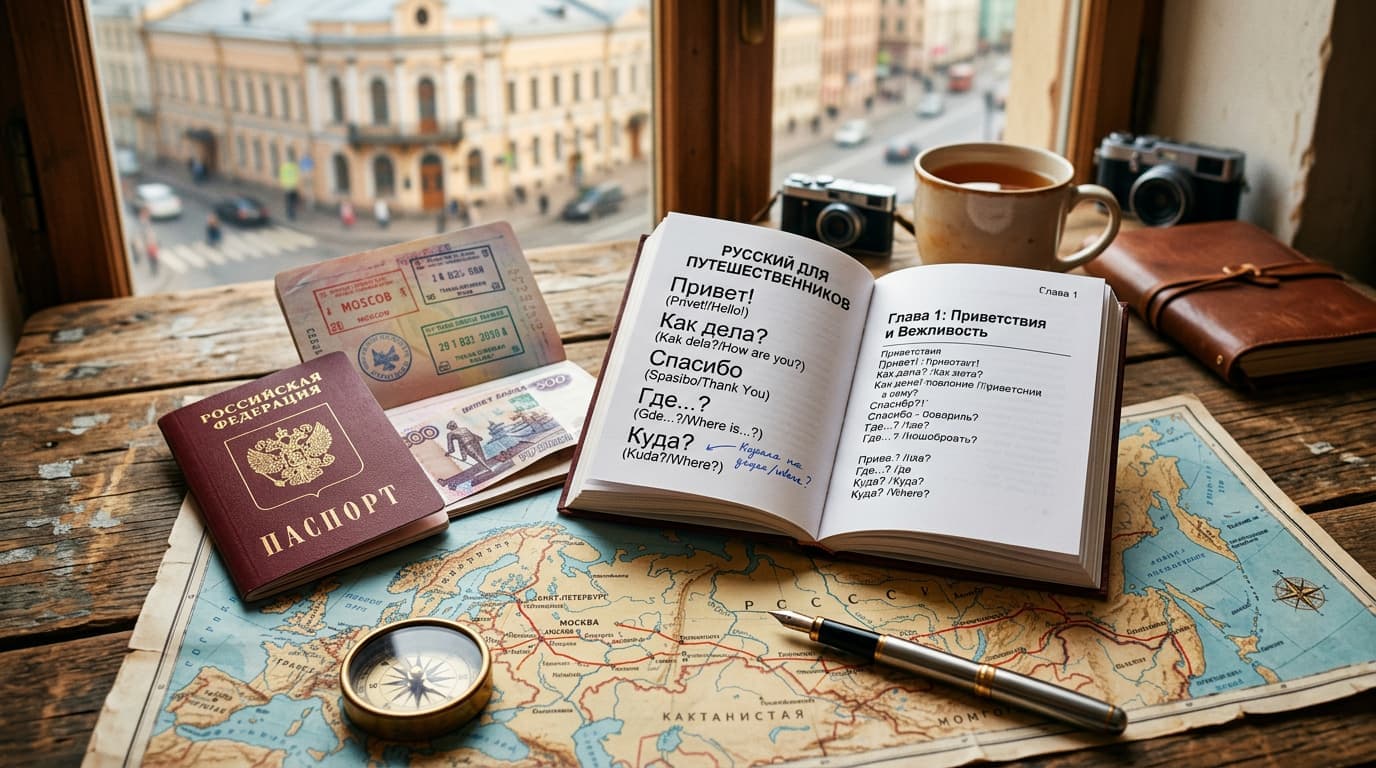

Ucraniano vs Russo: Principais Diferenças Explicadas
O russo e o ucraniano são línguas eslavas orientais de origem comum, mas evoluíram para idiomas distintos com diferenças significativas. Com aproximadamente 260 milhões de falantes de russo e 40 milhões de falantes de ucraniano no mundo, entender essas diferenças é importante para quem estuda idiomas, linguistas e qualquer pessoa interessada nas línguas eslavas. Este artigo explora as principais distinções entre russo e ucraniano.
- Como russo e ucraniano se separaram de um ancestral comum
- Diferenças principais em alfabeto, vocabulário, gramática e pronúncia
- Inteligibilidade mútua — os falantes se entendem?
- Qual língua aprender primeiro e dicas práticas
- Considerações culturais e políticas para quem estuda
Contexto Histórico
Russo e ucraniano compartilham cerca de 62% de similaridade lexical como línguas eslavas orientais, mas são idiomas distintos com alfabetos, vocabulário e pronúncia diferentes — não dialetos um do outro.
Ambas as línguas pertencem ao ramo eslavo oriental da família eslava, que também inclui o bielorrusso. Elas compartilham um ancestral comum — o antigo eslavo oriental (também chamado antigo russo) — falado na Rus' de Kiev do século IX ao XIII.
Pontos históricos principais:
- Séculos IX–XIII: Língua comum antigo eslavo oriental
- Séculos XIV–XVII: As línguas começaram a divergir
- Séculos XVIII–XIX: O russo tornou-se dominante no Império Russo
- Século XX: Ambas as línguas se desenvolveram de forma independente
- Hoje: Idiomas distintos com inteligibilidade mútua
Inteligibilidade Mútua
O quanto são parecidas?
- Falantes de russo entendendo ucraniano: ~50–70% (depende da região e da exposição)
- Falantes de ucraniano entendendo russo: ~70–85% (maior devido à exposição histórica)
Fatores que afetam a inteligibilidade:
- Região geográfica (regiões mais próximas = mais similaridade)
- Educação e exposição à outra língua
- Contexto e tema da conversa
- Língua escrita vs. falada (a escrita é mais parecida)
Conclusão: São parecidas o suficiente para que os falantes frequentemente entendam a comunicação básica, mas diferentes o suficiente para serem consideradas línguas separadas, não dialetos.
Sistemas de Escrita
Alfabeto Cirílico
Ambas as línguas usam o alfabeto cirílico, mas com diferenças:
Alfabeto russo: 33 letras
- Usa: Ё, Ъ, Ы, Э
- Não usa: Ґ, І, Ї
Alfabeto ucraniano: 33 letras
- Usa: Ґ, І, Ї, Є
- Não usa: Ё, Ы, Э, Ъ
Diferenças principais:
| Russo | Ucraniano | Som |
|---|---|---|
| И | І | Similar a "i" |
| Е | Є | Som "ie" |
| Г | Ґ | "g" forte (apenas ucraniano) |
| Ё | - | Som "io" (apenas russo) |
| Ы | - | Som característico do russo |
| Э | - | Som "e" (apenas russo) |
| Ъ | - | Sinal duro (apenas russo) |
Exemplos de palavras:
- Russo: дом (casa) vs Ucraniano: дім
- Russo: есть (comer) vs Ucraniano: їсти
- Russo: город (cidade) vs Ucraniano: місто
Diferenças de Vocabulário
Palavras Parecidas (Cognatos)
Muitas palavras são parecidas ou idênticas:
- Russo: вода (água) - Ucraniano: вода
- Russo: мать (mãe) - Ucraniano: мати
- Russo: книга (livro) - Ucraniano: книга
- Russo: солнце (sol) - Ucraniano: сонце
Palavras Diferentes (Falsos Cognatos)
Algumas palavras parecem parecidas mas têm significados diferentes:
- Russo: город (cidade) - Ucraniano: город (jardim)
- Russo: красный (vermelho) - Ucraniano: красний (bonito)
- Russo: позор (vergonha) - Ucraniano: позір (vista)
Palavras Completamente Diferentes
Muitas palavras comuns são completamente diferentes:
- Russo: собака (cachorro) - Ucraniano: пес/собака
- Russo: молоко (leite) - Ucraniano: молоко (igual)
- Russo: хороший (bom) - Ucraniano: добрий
- Russo: говорить (falar) - Ucraniano: говорити (parecido)
Estrangeirismos
Russo: Mais empréstimos de:
- Francês (ресторан, театр)
- Alemão (шлагбаум, бутерброд)
- Inglês (termos modernos)
Ucraniano: Mais empréstimos de:
- Polonês (influência histórica)
- Outras línguas eslavas
- Termos específicos do ucraniano
Curioso sobre as nuances do russo? Uma aula estruturada com um falante nativo ajuda você a entender o idioma no contexto — não só no papel.
Diferenças Gramaticais
Casos
Ambas as línguas têm 6 casos, mas o uso difere:
Semelhanças:
- Nominativo, Genitivo, Dativo, Acusativo, Instrumental, Preposicional
- Mesmas funções gerais dos casos
Diferenças:
- Caso vocativo: O ucraniano tem um 7º caso (vocativo) para se dirigir às pessoas
- Russo: мама (mãe) - Ucraniano: мамо! (mãe! — vocativo)
- As desinências dos casos diferem em muitas palavras
- Algumas preposições exigem casos diferentes
Aspectos Verbais
Ambas têm aspectos perfectivo/imperfectivo, mas:
- Russo: Sistema de aspecto mais complexo
- Ucraniano: Um pouco mais simples, mas ainda complexo
- Alguns verbos têm pares de aspecto diferentes
Tempo Futuro
Russo: Usa verbos perfectivos/imperfectivos
- Буду читать (estarei lendo — imperfectivo)
- Прочитаю (lerei — perfectivo)
Ucraniano: Sistema parecido, mas com diferenças na formação
Tempo Passado
Russo: O passado é mais simples (был, была, было, были) Ucraniano: Passado mais complexo com concordância de gênero
Diferenças de Pronúncia
A pronúncia é onde muitos estudantes percebem primeiro a diferença entre russo e ucraniano. Essas diferenças também se refletem nos dialetos regionais do russo em diferentes regiões.
Sons Vocálicos
Russo:
- Tem o som característico "ы" (difícil de descrever, como "ih")
- "Ё" pronunciado como "io"
- "Э" como "e" claro
Ucraniano:
- "І" pronunciado como "i" (como o "и" em russo)
- "Є" pronunciado como "ie"
- "Ї" pronunciado como "ii"
Sons Consoantes
Russo:
- "Г" geralmente é som de "g" suave ou "h"
- A palatalização é muito importante
Ucraniano:
- "Г" pode ser som de "g" forte ou "h"
- "Ґ" é sempre "g" forte (como em inglês)
- Padrões de palatalização diferentes
Padrões de Acentuação
- Russo: Acentuação complexa e imprevisível (é preciso memorizar)
- Ucraniano: Também complexa, mas os padrões diferem
- A acentuação afeta a pronúncia das vogais em ambas as línguas
Quer saber como essas diferenças soam na prática? Nossos professores nativos podem mostrar exemplos reais em uma aula experimental grátis de russo.
Comparação de Frases Comuns
Cumprimentos
| Português | Russo | Ucraniano |
|---|---|---|
| Olá | Привет / Здравствуйте | Привіт / Добрий день |
| Bom dia | Доброе утро | Добрий ранок |
| Boa noite | Добрый вечер | Добрий вечір |
| Tchau | До свидания | До побачення |
Palavras Básicas
| Português | Russo | Ucraniano |
|---|---|---|
| Sim | Да | Так |
| Não | Нет | Ні |
| Obrigado | Спасибо | Дякую |
| Por favor | Пожалуйста | Будь ласка |
| Desculpe | Извините | Вибачте |
Qual Língua Você Deve Aprender?
Aprenda russo se:
- Você quer se comunicar com ~260 milhões de falantes no mundo — o russo é o 8º idioma mais falado globalmente e é usado em muitos países
- Você se interessa por literatura, cultura ou história russa
- Você precisa para negócios na Rússia ou em países ex-soviéticos
- Você planeja viajar bastante pela Rússia
- Você quer acesso a mais recursos de estudo — será que o russo é difícil para falantes de português? É um desafio, mas muito alcançável com estudo estruturado
Aprenda ucraniano se:
- Você quer se conectar com a cultura e o povo ucraniano
- Você se interessa pela história e literatura ucraniana
- Você tem ascendência ou laços familiares ucranianos
- Você quer apoiar a língua e a cultura ucraniana
- Você se interessa pelos aspectos únicos do ucraniano
Aprenda as duas se:
- Você se interessa por linguística eslava
- Você quer o máximo de comunicação no Leste Europeu
- Você tem tempo e motivação para as duas
- Você estuda linguística comparada
Aprender Uma Depois da Outra
Se você sabe russo, aprender ucraniano é mais fácil:
- Estrutura gramatical compartilhada
- Vocabulário parecido (50–70% de sobreposição)
- Mesmo alfabeto (com pequenas diferenças)
- Tempo estimado: 6–12 meses até nível conversacional
Se você sabe ucraniano, aprender russo é mais fácil:
- As mesmas vantagens acima
- Tempo estimado: 6–12 meses até nível conversacional
Vantagem principal: Depois que você aprende uma, a outra fica bem mais fácil por causa das raízes e da estrutura compartilhadas.
Considerações Culturais e Políticas
Status das Línguas
Russo:
- Língua oficial na Rússia, Bielorrússia, Cazaquistão, Quirguistão
- Muito falado em países ex-soviéticos
- Uma das 6 línguas oficiais da ONU
Ucraniano:
- Língua oficial da Ucrânia
- Importância e reconhecimento crescentes
- Rica tradição literária
Política Linguística
Ambas as línguas têm importância política:
- A escolha da língua pode ser uma declaração política
- Supressão histórica do ucraniano em alguns períodos
- Esforços atuais para promover a língua ucraniana
- Ambas as línguas são importantes para entender a região
Dicas Práticas para Quem Estuda
Se estiver aprendendo russo:
- Foque no som "ы" — é único
- Domine os padrões de acentuação cedo
- Aprenda o vocabulário de forma sistemática
- Pratique a palatalização
Se estiver aprendendo ucraniano:
- Aprenda o caso vocativo (7º caso)
- Preste atenção em "Ґ" vs "Г"
- Estude o vocabulário específico do ucraniano
- Entenda a distinção entre "І" e "И"
Se estiver aprendendo as duas:
- Comece por uma, domine até o nível B1–B2
- Depois aprenda a outra, focando nas diferenças
- Crie tabelas de comparação
- Pratique alternar entre as línguas
Recursos para Estudo
Recursos de russo:
- Mais disponíveis
- Maior oferta de cursos, aplicativos, livros
- Mais conteúdo de mídia (filmes, TV, música)
- Mais comunidades online
Recursos de ucraniano:
- Oferta crescente de recursos
- Disponibilidade crescente de cursos
- Rico conteúdo cultural
- Comunidades de estudo acolhedoras
Conclusão
Russo e ucraniano são:
- Parecidos: Gramática, vocabulário e alfabeto compartilhados
- Diferentes: Idiomas distintos com características únicas
- Mutualmente inteligíveis: Em certa medida, especialmente na escrita
- Ambos valiosos: Cada um tem sua própria importância cultural e prática
Resumo: São parecidos o suficiente para que aprender um facilite o outro, mas diferentes o suficiente para que cada um exija estudo dedicado. Escolha com base nos seus objetivos, interesses e necessidades.
Seja russo, ucraniano ou os dois, aprender uma língua eslava abre portas para culturas ricas, literatura e milhões de falantes.
Perguntas Frequentes
Os russos entendem ucraniano?
Parcialmente. Falantes de russo normalmente entendem 50–70% do ucraniano falado, dependendo da exposição, região e contexto. O ucraniano escrito costuma ser mais fácil de acompanhar devido às raízes cirílicas compartilhadas e ao vocabulário cognato. Porém, palavras ucranianas únicas, diferenças de pronúncia e as letras distintas "Ї" e "Є" podem dificultar a compreensão total sem estudo prévio.
Qual língua é mais fácil de aprender — russo ou ucraniano?
Para falantes de português, ambas têm dificuldade parecida (Categoria III do FSI). O russo tem mais recursos de estudo disponíveis e uma base global de falantes de cerca de 260 milhões de pessoas, o que pode facilitar a prática. O ucraniano tem um sistema de pronúncia mais regular e um caso vocativo extra. Se você já sabe uma, a outra fica bem mais fácil graças à gramática eslava oriental compartilhada e cerca de 62% de sobreposição lexical.
Russo e ucraniano são a mesma língua?
Não. Apesar da origem comum no antigo eslavo oriental e da sobreposição considerável, russo e ucraniano são línguas separadas com alfabetos, vocabulário, gramática e padrões de pronúncia distintos. Os linguistas as classificam como duas línguas dentro da família eslava oriental, junto com o bielorrusso. Chamá-las de "a mesma língua" ignora séculos de desenvolvimento independente e diferenças estruturais significativas.
Pronto para começar a aprender russo? Agende uma aula experimental grátis e comece sua jornada no fascinante mundo das línguas eslavas!